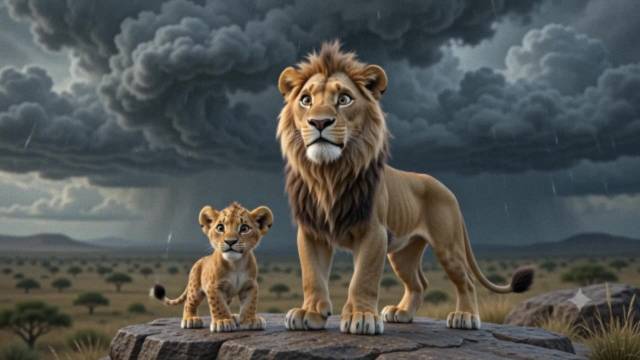
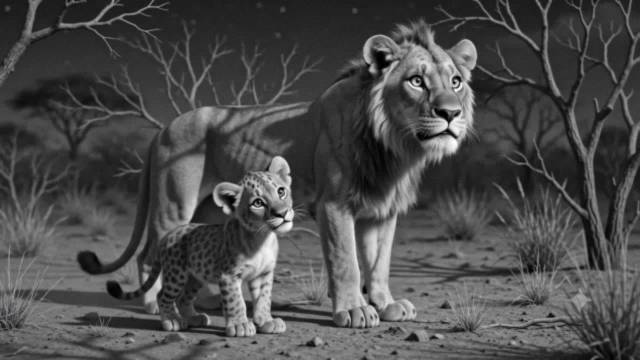
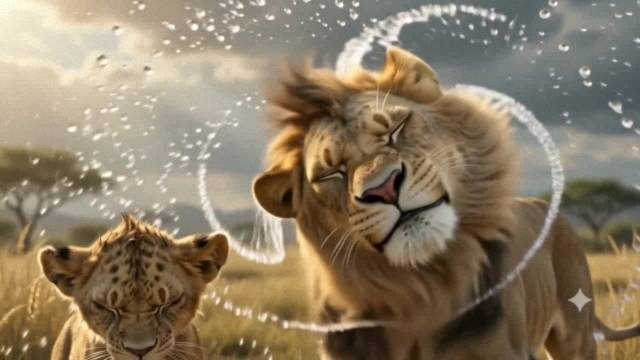
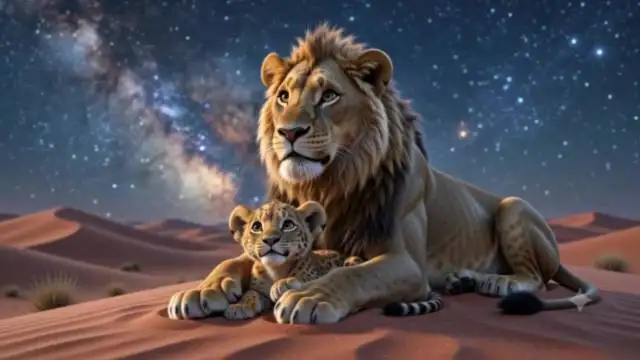
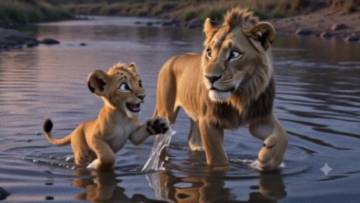
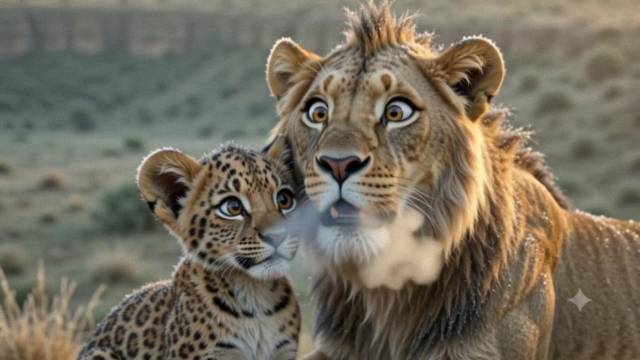
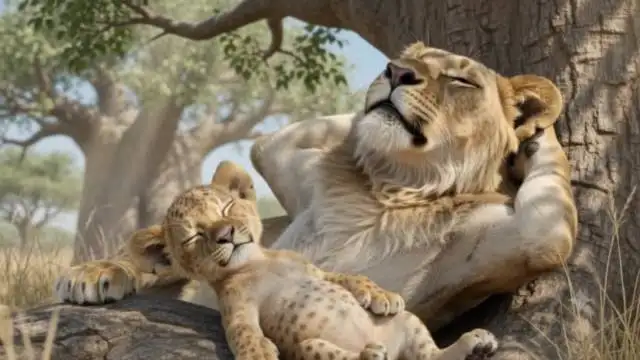
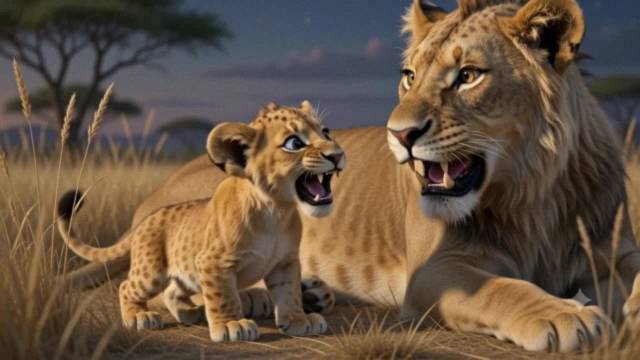
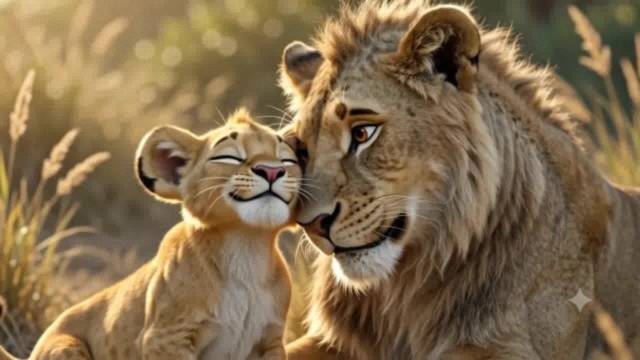
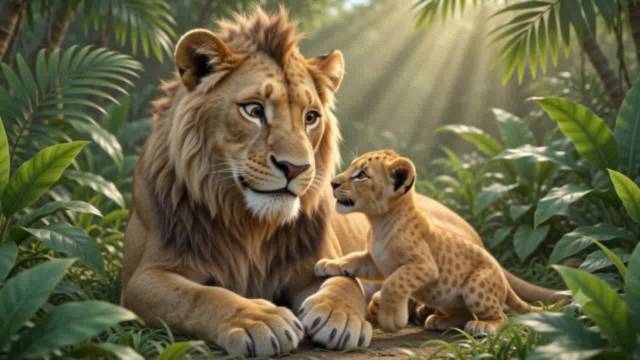
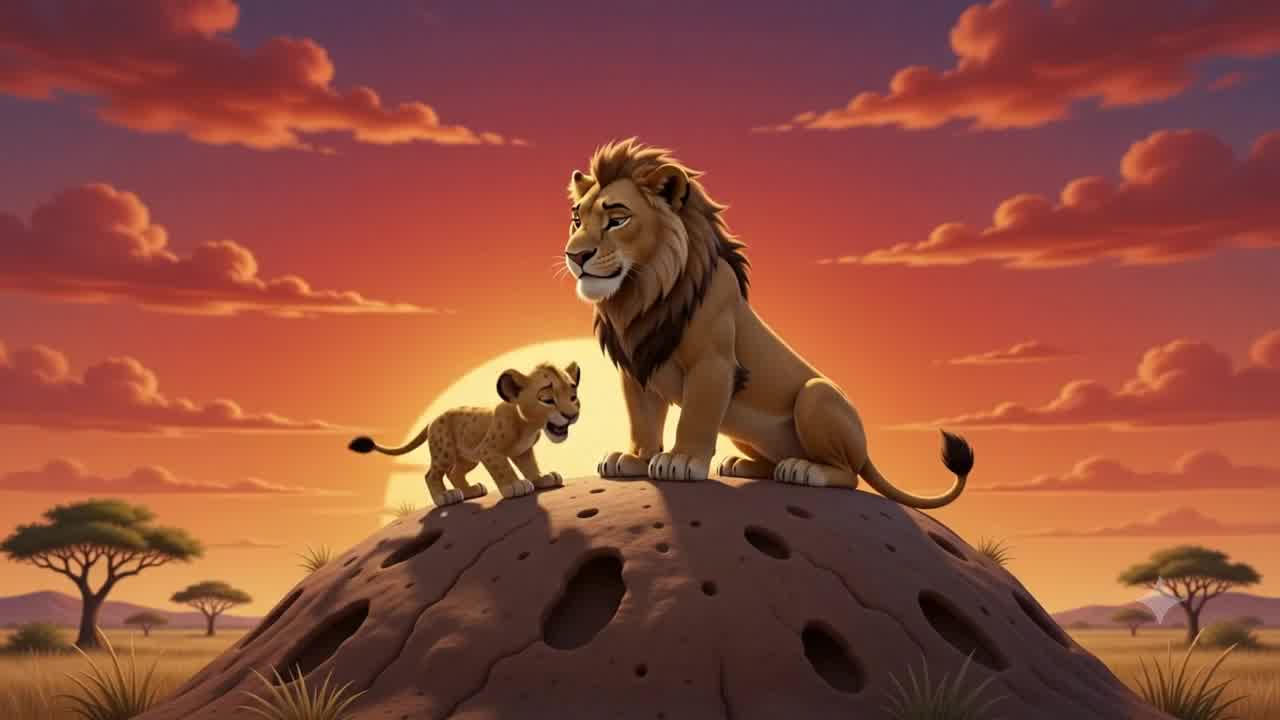
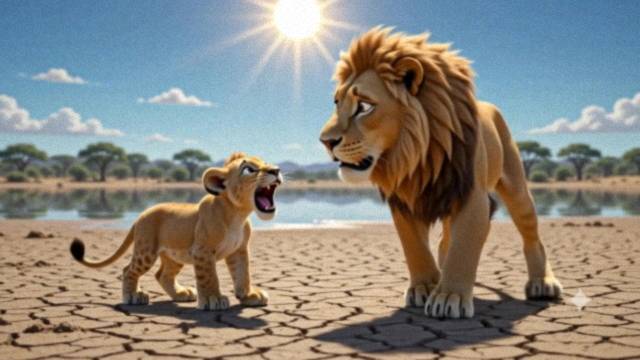
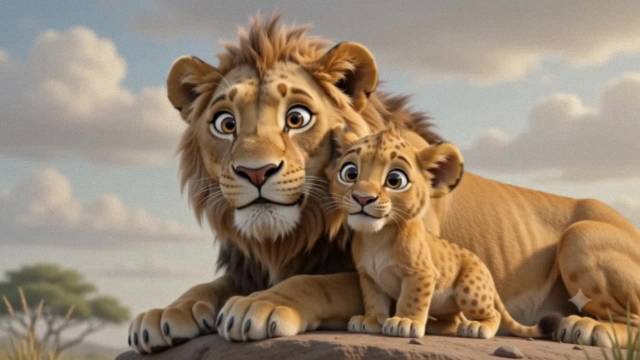
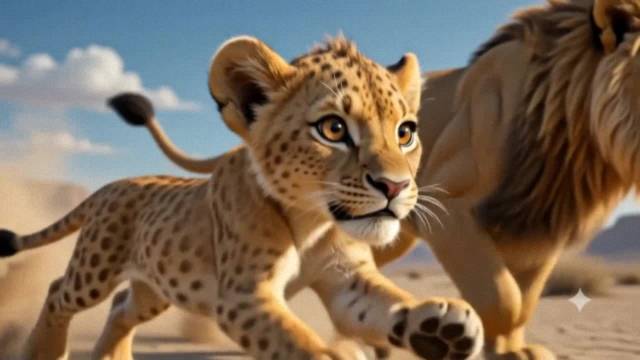
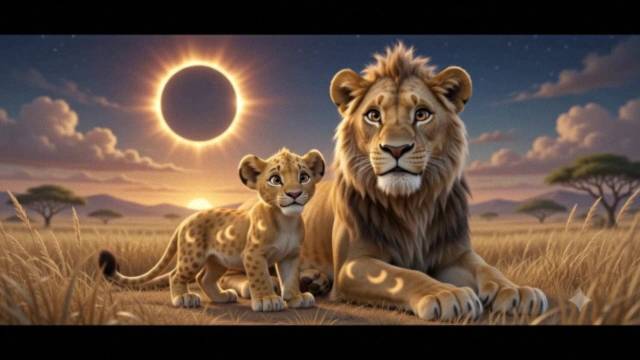
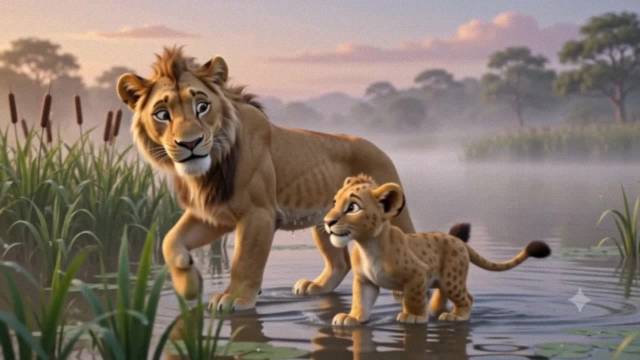
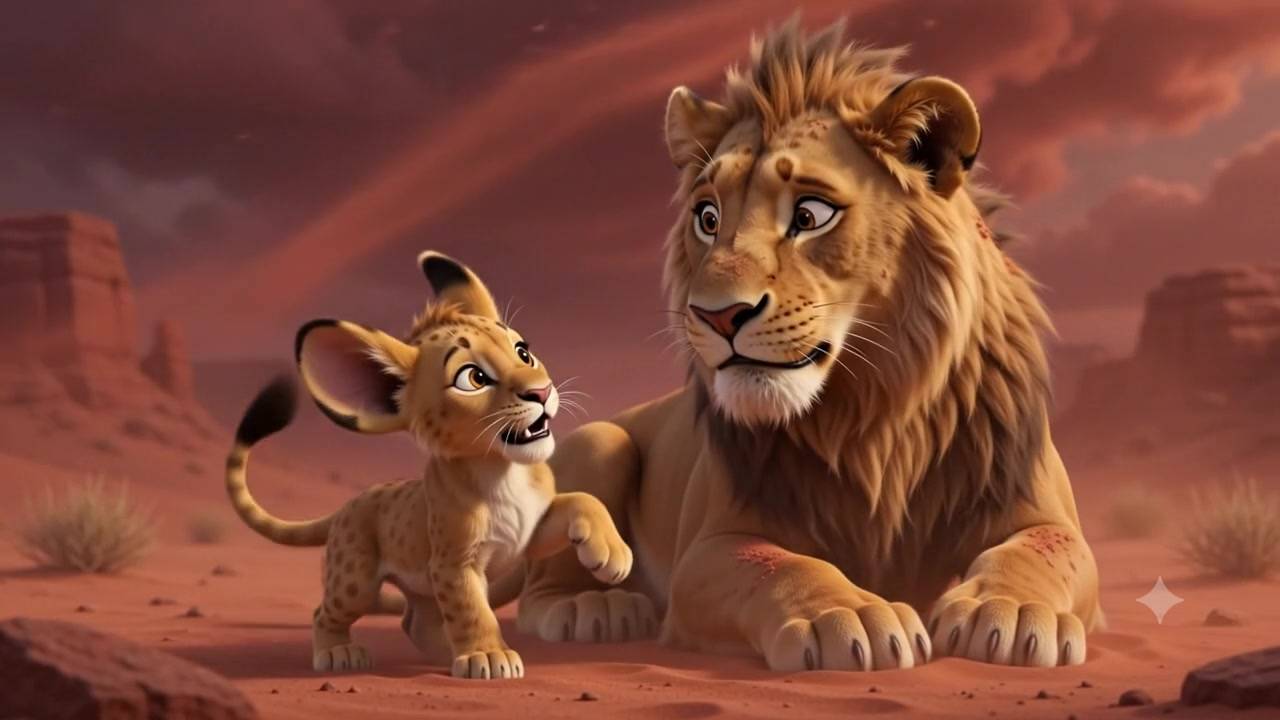
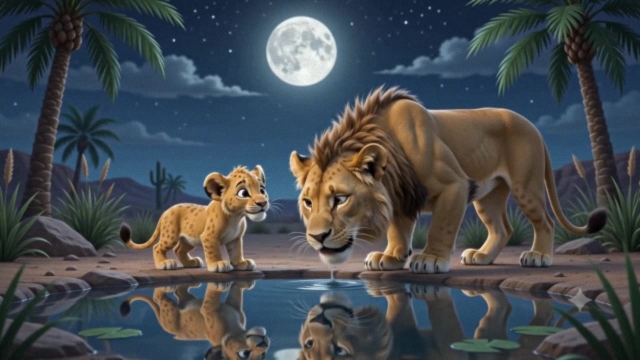
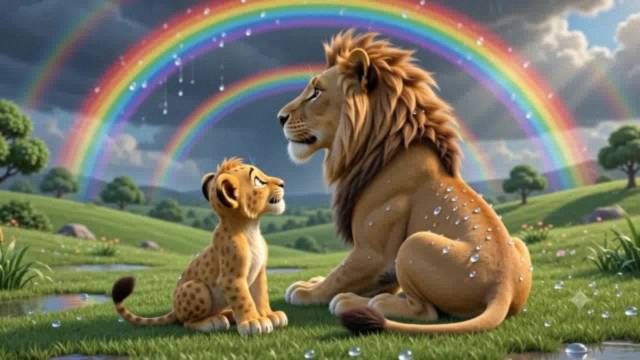
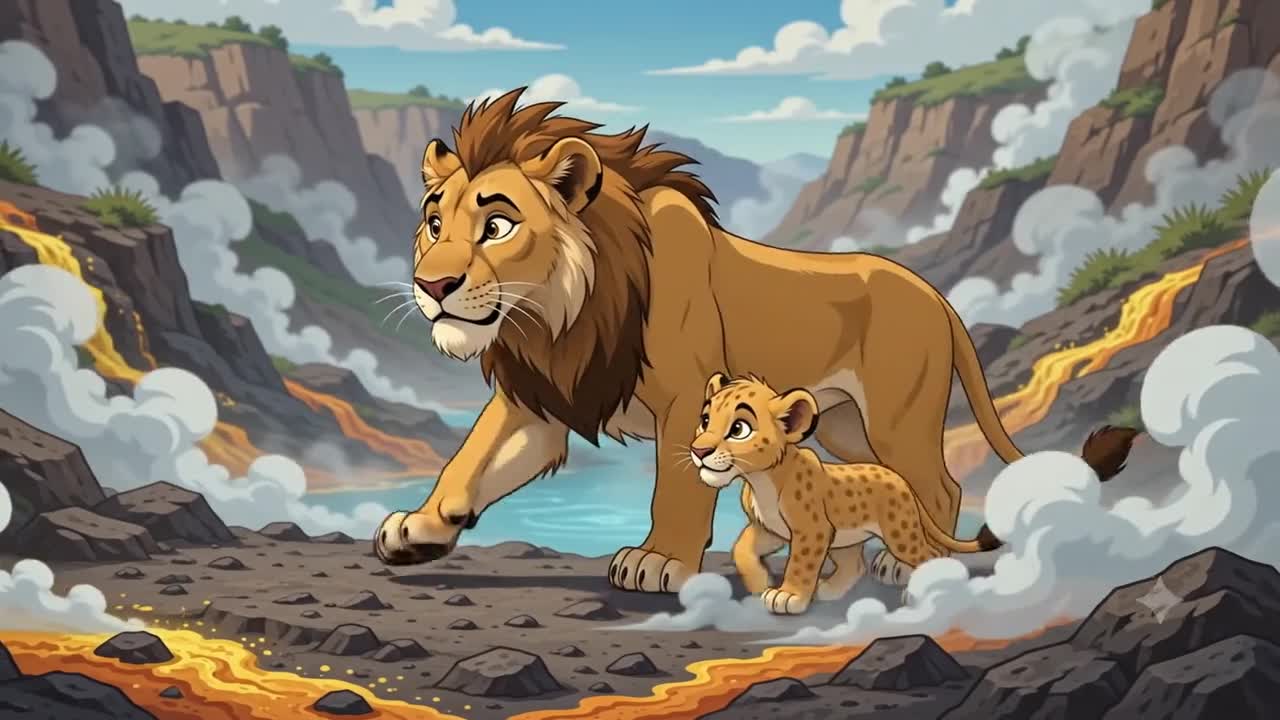
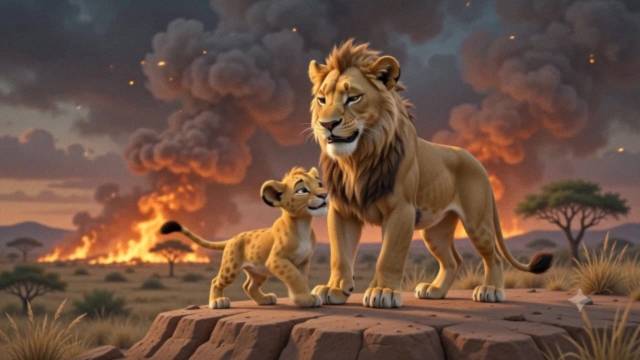
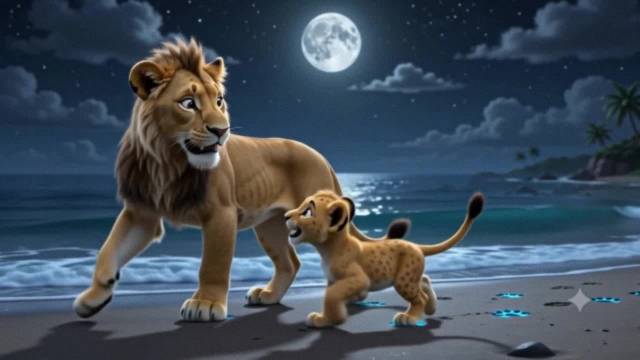
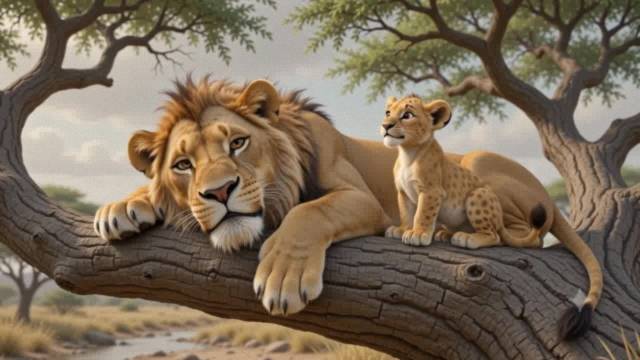
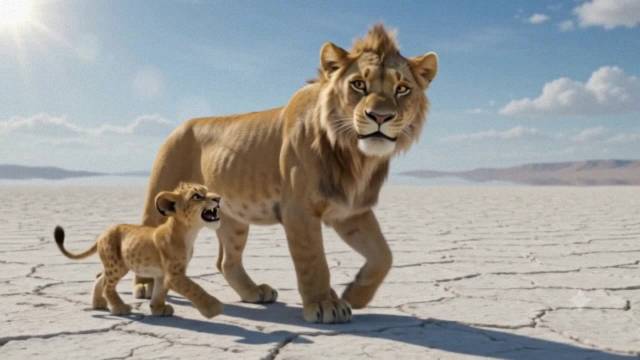
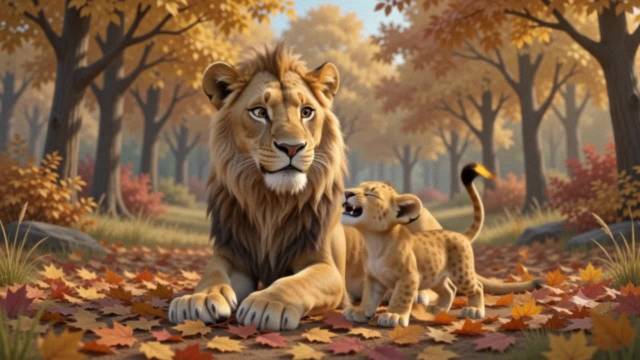
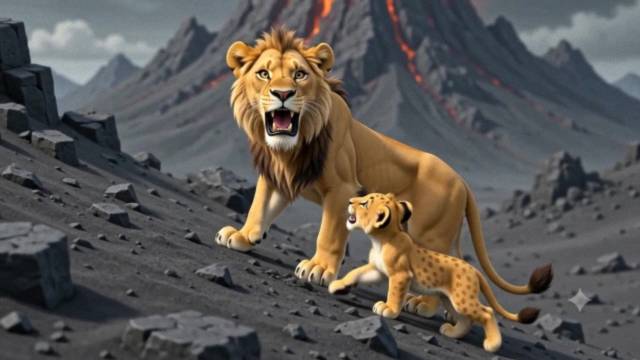
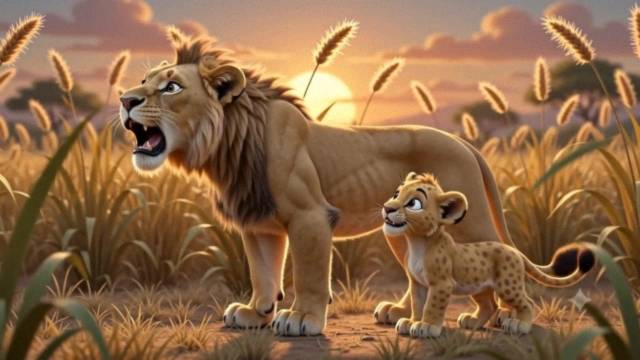
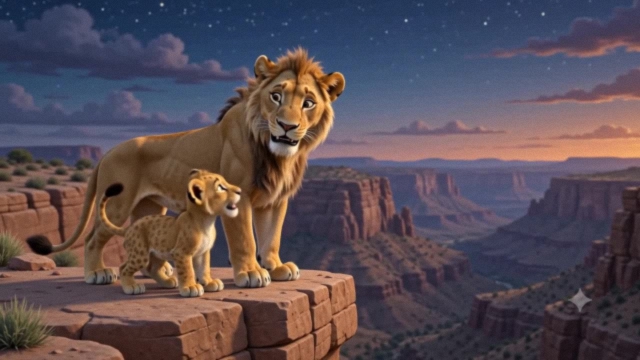
Meet the Duo: Early morning patrol is tough when you’re a sleepy cub! Big Kael sits tall as a vigilant, silent guardian in the mist. Meanwhile, Pip uses Kael’s giant front paws as a furry, built-in sleeping bag, refusing to open his massive eyes until the sun is fully up. Dawn Watch
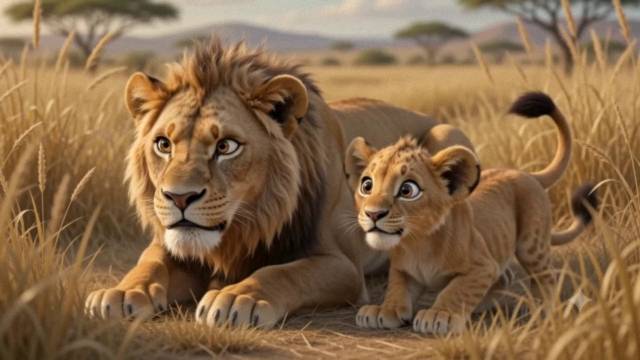
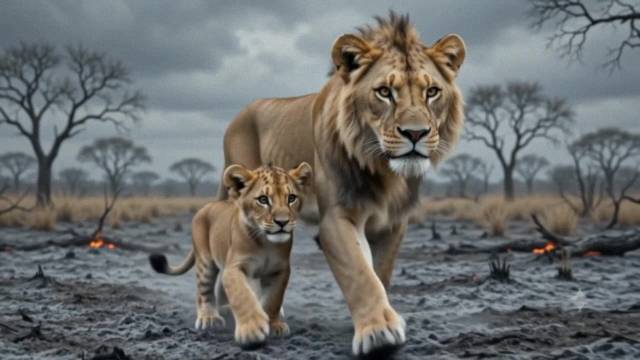
Big Kael, a young adult male lion with a scruffy, developing mohawk mane and broad, protective shoulders, is in a low-profile, stealthy crouch within tall, golden savanna grass. Next to him is his younger brother Pip, a small, energetic lion cub with massive, inquisitive, wide-open eyes and large, twitching ears. Pip is attempting to mimic Kael’s crouch but is struggling, his back arched too high and his tail wiggling with pure excitement. Character Spotlight: “Big Kael & Pip”
Whispering Grasslands: The Future
Kael and Pip are currently exploring the golden horizons of the Whispering Grasslands. This is a place of endless discovery where our duo faces the challenges of growing up, one lesson at a time.
Did You Know? Big Kael’s mane is still just a scruffy mohawk—he hasn’t quite grown into his role as “King of the Savanna” yet, but he’s working on it!
Did You Know? Pip’s spots will eventually fade as he grows up, which is exactly why he’s so eager to explore while he still has them!
Stay tuned! The Future: The morning mist hides many secrets at the watering hole. Will Pip’s fearless curiosity push them to explore the hazy tree line?
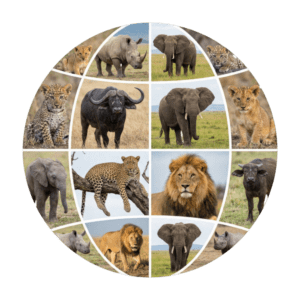
Our foundation is built on a vetted library of 2,028 professional 2D JPEG images. This collection isn’t just a gallery; it is a structured dataset designed for spatial intelligence. We focus on the African Big 5 and associated megafauna to test AI’s ability to understand:
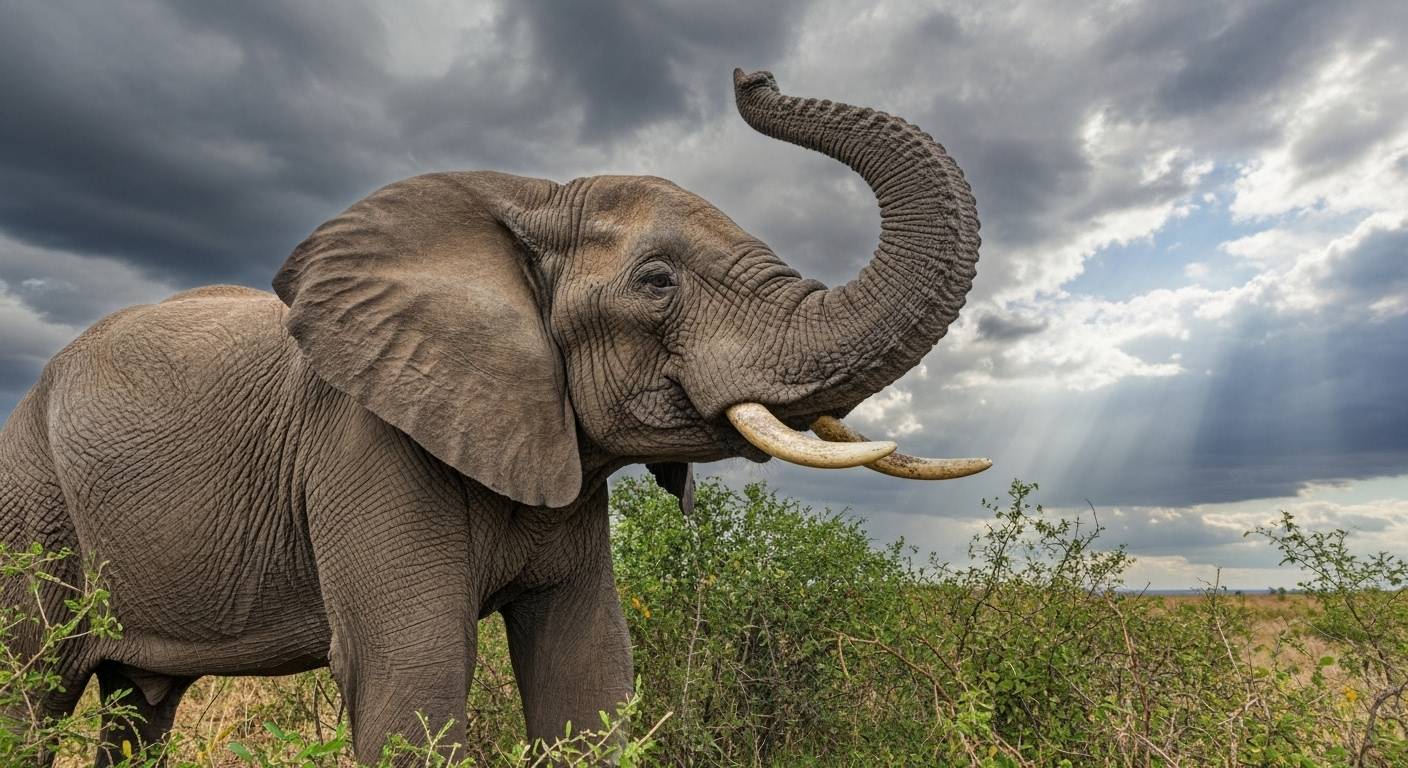
Scale Persistence: (588 Elephant frames)
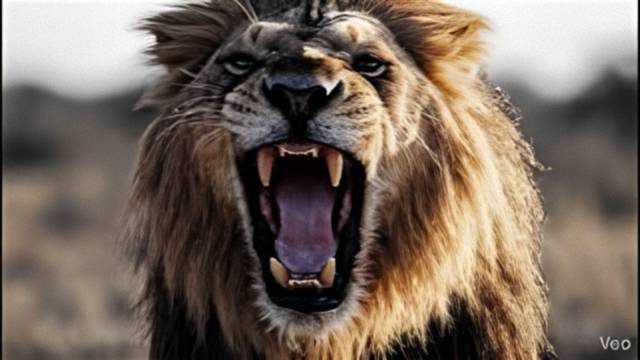
Volumetric Texture: (428 Lion frames)
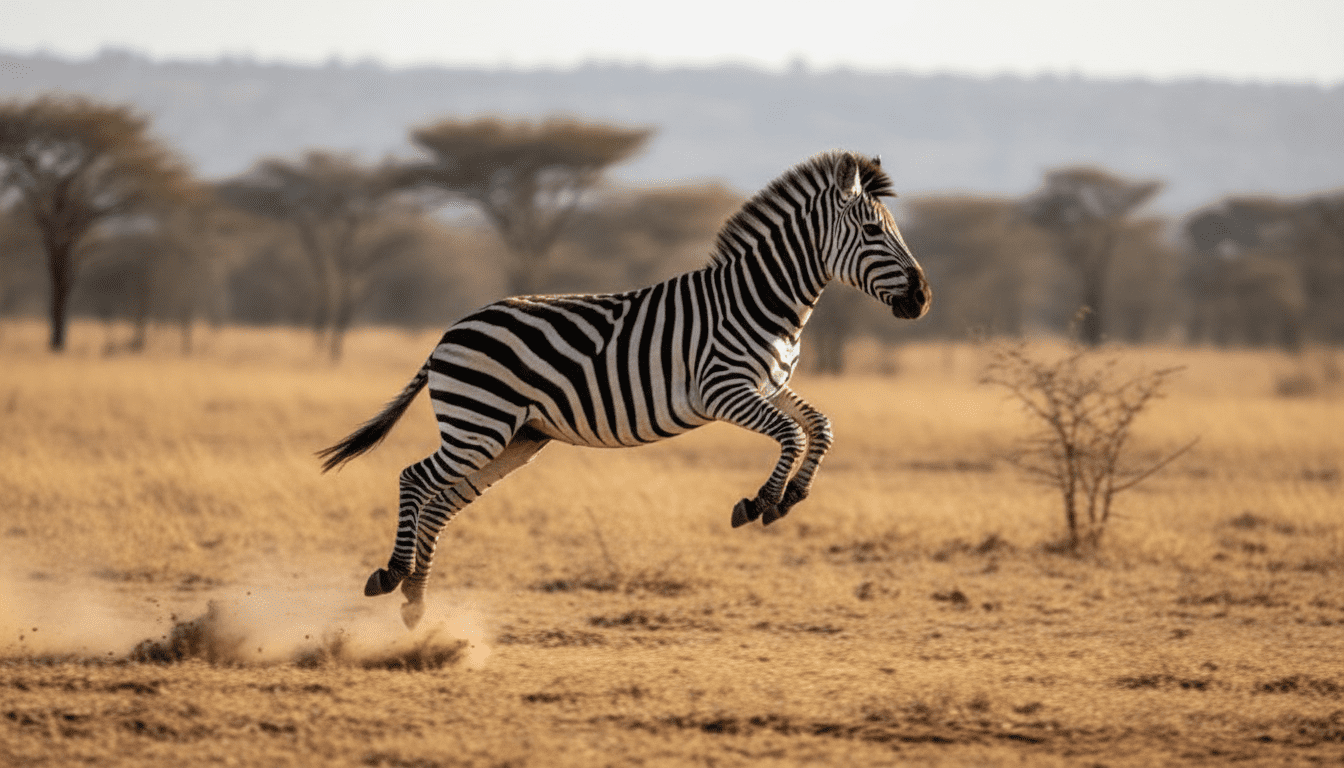
High-Contrast Edge Detection: (279 Zebra frames)
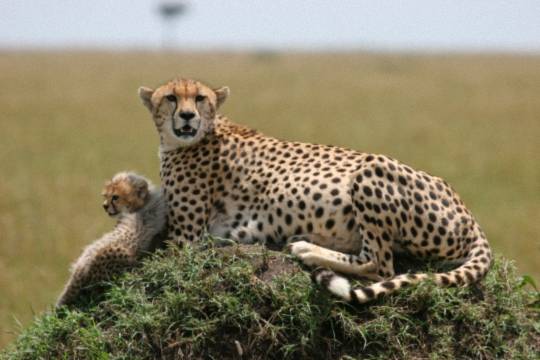
Pattern Stability: (281 combined Leopard and Cheetah frames)
2. Generative Engine: Gemini 3 Pro & Veo 3.1
We utilize the Google Gemini 3 Pro architecture and Veo 3.1 to generate cinematic wildlife sequences.
By leveraging latent action models, we create 24fps high-fidelity video that serves as a bridge between static 2D imagery and fully realized 3D environments.
Our site currently showcases 28 of these specialized AI cinematic works.
3. Local Compute Infrastructure
To process and benchmark these models, we operate on high-tier local hardware capable of handling massive VRAM overhead:
Workstation: Lenovo ThinkStation P7
Compute: Dual Nvidia RTX A5500 GPUs
Memory: 48GB VRAM via NVLink
Workflow: This setup allows for local pre-visualization of NeRFs (Neural Radiance Fields) and Gaussian Splatting to ensure the highest spatial accuracy before generative synthesis.
The next phase of our project involves the integration of Google DeepMind’s Genie 3.
Our goal is to move beyond the frame—allowing visitors and researchers to step into our photography and navigate a 360-degree, physics-compliant African savanna.
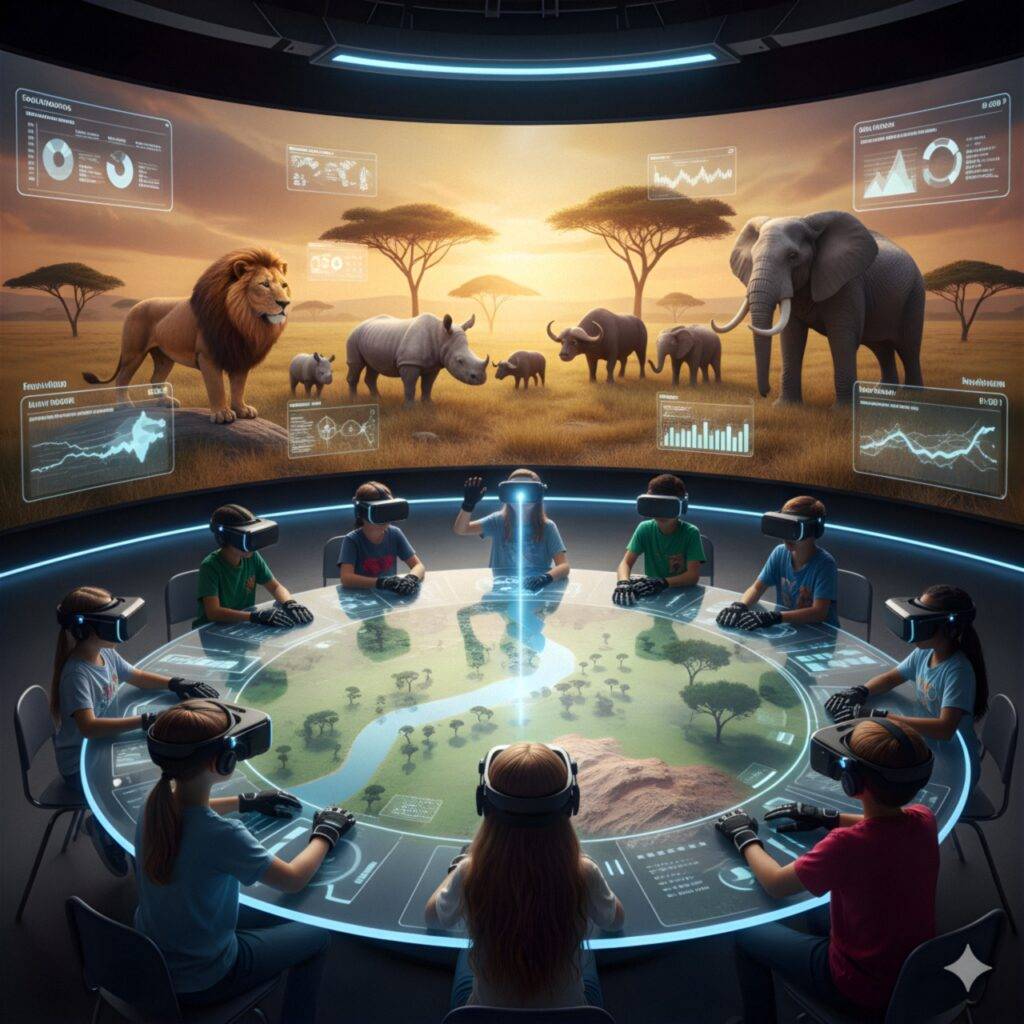
To achieve AGI outcomes in education, Gemini can generalize the relationship between the Big 5, lion, leopard, rhinoceros, elephant, and Cape buffalo, and their environment into a “living history” curriculum. Genie World Model generates interactive, 360-degree environments where students don’t just watch videos of the savanna, but interact with a physics-compliant ecosystem to see how changing one variable (like water levels) affects every animal differently.
Website Scene Summary
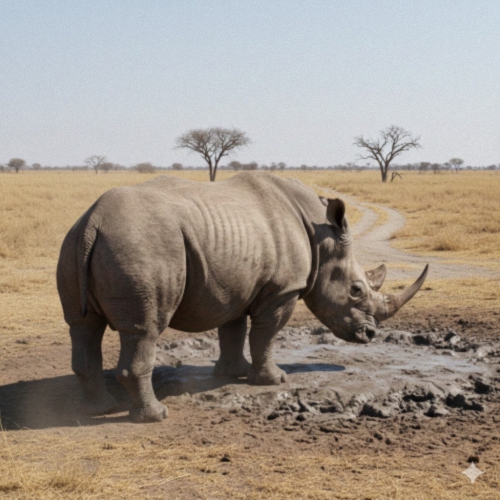
Step into an expansive, Image is a high-resolution wildlife photograph featuring a rhinoceros resting on the ground in a natural habitat.
The rhino’s skin is a textured gray, with visible folds and wrinkles, indicating its thick, protective hide. The rhino is lying on a dusty, dry earth surface, surrounded by sparse, leafless branches and dry grass, suggesting a savanna or bushland environment. The lighting is natural, casting soft shadows that highlight the rhino’s features and the surrounding vegetation. The overall composition centers on the rhino, capturing its serene and majestic presence in the wild. Explore this simulation to witness how intelligent world models create realistic creatures, ambient lighting, and rich terrain across our growing library of savanna wildlife.
Control Layout
W, A, S, D keys: Move your character or perspective forward, left, backward, and right.

![DawnWatch8<span style="color:red;">[NEW]</span>](https://wildanimalnature.com/wp-content/uploads/2025/05/Thumbnail-0007.jpg)